A rewarding loop hike to the panoramic summits of Monte Porcile and Monte Verruga, featuring a few more demanding sections.
The route can be enjoyed throughout the year, provided the ground is dry, but it is especially recommended in late spring when the slopes are covered with wildflowers, including several species of orchids.
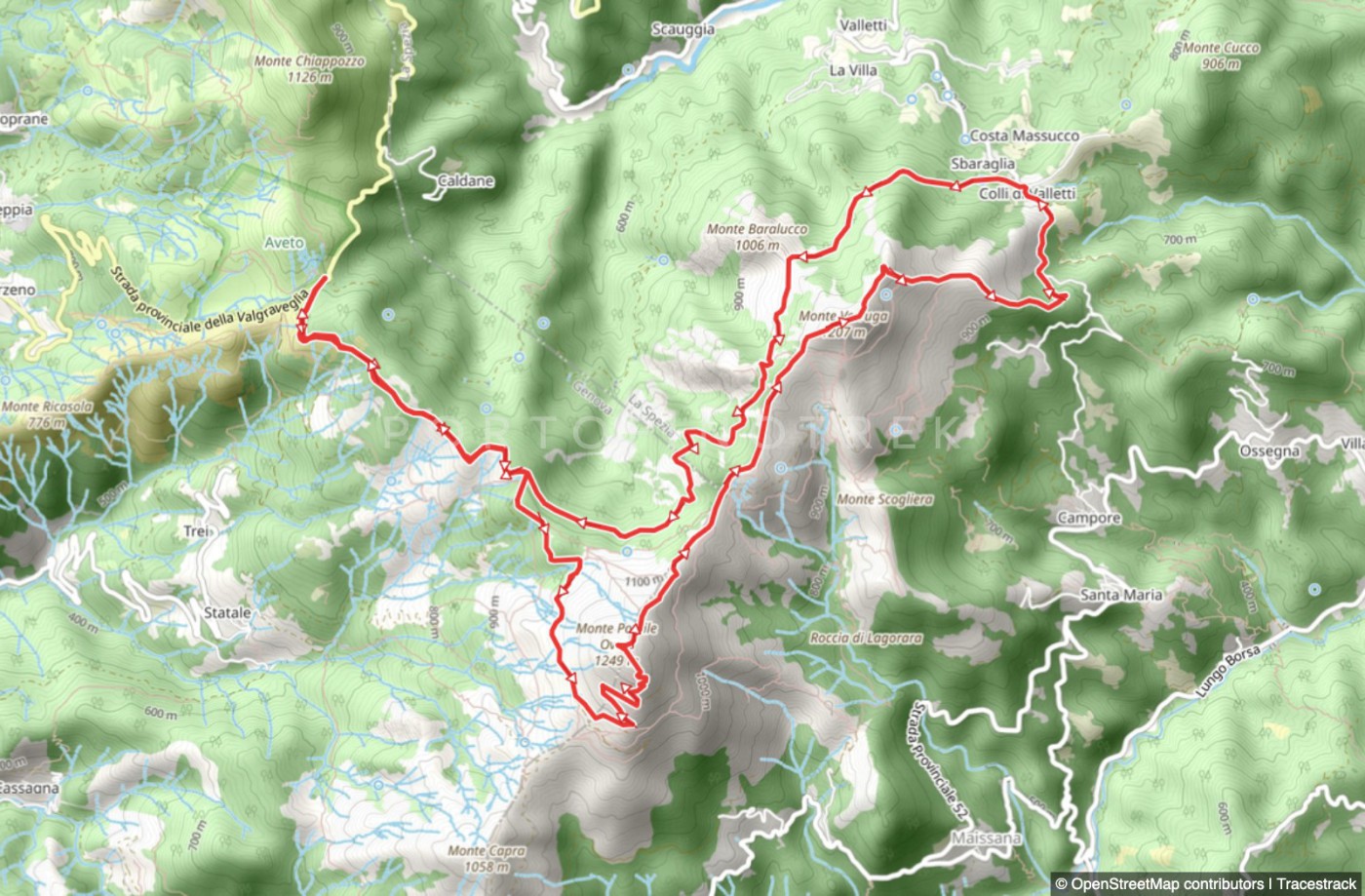
The starting point is Passo del Biscia (890 m), the mountain pass between the provinces of Genoa and La Spezia, which can be reached from Lavagna via the SP33 and then the SP26 through the Val Graveglia, or from Varese Ligure via the SP49 and subsequently the SP57.
At the pass, where a small chapel and a monument dedicated to the partisans can be found, there is ample parking available, although the area is very popular at weekends.
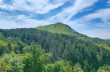
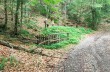
Cross the provincial road and pass through the gate leading to the dirt road that winds pleasantly through the pine forest, with a few open sections offering views of Monte Porcile.
After passing the Forestry Hut (closed to the public), ignore a left-hand turn and continue along the main track, where it is not uncommon to encounter wild horses. About 3.5 km from Passo del Biscia, a short and gentle descent leads to the southern slopes of Monte Porcile.
Leave the Alta Via delle Cinque Terre  and follow the trail marked with
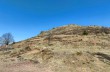
  on the left. A series of switchbacks climbs steadily over rocky terrain characterized by the reddish colour of jasper, crossing a dry and sunny landscape.
Along the way, several remains linked to manganese mining can be seen. This activity flourished between the 1920s and the 1940s, and a little further on there is also an abandoned quarry.
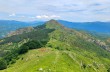
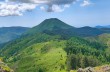
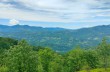
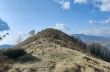
Beyond a group of radio repeaters, the final 100 metres become steeper, but the effort is rewarded by the magnificent panorama from the East Summit of Monte Porcile, where the blue sea contrasts beautifully with the green ridges of the Ligurian Apennines.
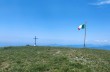
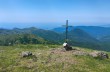
A short walk over grassy terrain leads to the West Summit of Monte Porcile (1,249 m), briefly crossing from the province of La Spezia into that of Genoa. Both summits are topped by a cross, while the western summit also features an Italian flag.
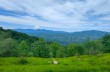
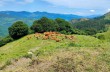
Leaving the flag behind, the trail descends northwards across broad grassy meadows where peaceful herds of cattle graze, always accompanied by the rugged silhouette of Monte Verruga.
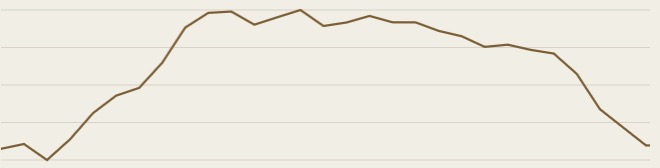
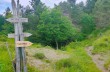
After about one kilometre of pleasant descent and a loss of roughly 200 metres in elevation, the route reaches the junction at Fontana Sacrata, where you continue straight ahead along the trail marked as 610V on maps, although no signs are visible on the ground.
The track is nevertheless easy to follow and climbs gently through pines and ferns to a junction where the left-hand path to Sella delle Matite is ignored, continuing straight ahead.
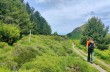
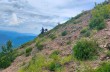
After another trail junction, the ascent becomes steeper. A short section enclosed by dense vegetation gives way to a more open landscape of low shrubs and rocky outcrops dominated by red jasper. In late spring and early summer, this stretch becomes particularly attractive when broom bushes are in bloom, painting the slopes bright yellow.
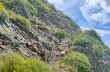
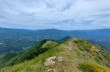
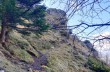
Following the not always obvious path that winds among large rocks, the route reaches the final section, which requires a little caution. Assisted by fixed ropes, the rugged rock face is climbed to reach the summit of Monte Verruga (1,207 m), a little-visited but remarkably scenic peak of the Ligurian Apennines.
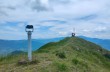
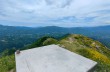
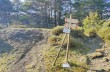
At the top, a telescope allows visitors to admire the surrounding mountains and the sea, while a compass rose beside the summit cross helps identify the main peaks. The panorama extends over the Val di Vara, the Gulf of Tigullio, and as far as the Portofino Promontory.
The descent follows the opposite side of the mountain on a rocky and occasionally slippery trail that drops steeply in zigzags for about one hundred metres before becoming gentler and crossing grassy slopes alongside a fence.
At the foot of a small hill, the path turns right and climbs gently around it before descending on the opposite side. This section is not always obvious, making a GPX track particularly useful.
After about 700 metres of descent, interspersed with flatter stretches across open meadows, the trail becomes more defined and enters the woods for the final descent, eventually reaching the dirt road approximately one hour after leaving the summit of Monte Verruga.
Turn left towards Colli di Valletti (776 m), a tiny hamlet of stone houses dominated by the charming Chapel of the Holy Trinity, which can be reached in about ten minutes.
Following the signs, continue to the left of the church and climb past a few houses before entering a beautiful chestnut forest.
Along the way, the trail reaches the Casun di Brichetti (823 m), where the remains of an old stone building and a table with benches provide a pleasant shaded resting place.
There is also a tap, although the water is not guaranteed to be drinkable.
The climb continues rather steeply until reaching a junction where a short detour on the right leads in a few minutes to the Cappella della Costa, a small chapel overlooking the valley, with a picnic area located just behind it.
Continuing straight on the wide path, a final uphill effort leads, after about 600 metres, to a saddle between Monte Baralucco on the right and Monte Verruga on the left.
The trail then crosses an open and level section at the edge of a pine forest before re-entering the woods and climbing to Fontana Segà (1,050 m), where a spring (without guaranteed drinking water) and a bench offer another pleasant resting place.
Continue uphill to the right to reach a large rocky outcrop before descending towards Sella delle Matite (1,028 m), an important junction where several trails meet.
Following trail marker 602 and the direction to Passo del Biscia, continue on the right-hand path, which descends gently through the forest for just over two kilometres, with a few more open stretches, eventually rejoining the dirt road near the Forestry Hut passed earlier in the day.
Retracing the same road without difficulty brings you back to Passo del Biscia, where this rewarding loop hike comes to an end.
 +
+